Sondewatch
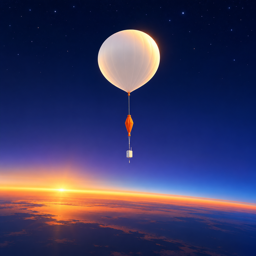
Twice a day, weather stations around the world launch radiosondes, instruments carried more than 30 kilometres into the stratosphere by a balloon. When it bursts, the sonde parachutes back to earth and lands in a field, a forest or a garden. Sondewatch shows you every one within range, live, and tells you where each will come down.
Features
- A live map of every radiosonde and amateur high-altitude balloon nearby, coloured by whether it is climbing, falling or down
- The flown track and the predicted path to the landing point for any balloon you select
- Distance and direction to the balloon and to its landing, with an arrow that turns with your compass
- Elevation above your horizon, straight-line range, and whether it sits above your radio horizon, with its transmit frequency for listening on a scanner
- Burst height and time, time aloft, and predicted landing time
- Charts of altitude over time, temperature and dew point by height, and wind by height, from the sonde’s own measurements, with the freezing level and the tropopause
- The launch sites nearest you, with their schedules in your local time, the sonde types and frequencies they fly, and a reminder before each launch
- Chase Mode, alerting you as you close on a watched balloon or its landing point
- A log of your finds with a photo and a note, and an optional report to the sonde-hunting community
- Nearest Landing widget for the Home Screen and the Lock Screen
- Watched balloons’ tracks and the launch sites are kept on your phone, so they stay readable in a field with no signal
- Universal — on iPad the balloon list sits beside its detail, and the map runs the full width of the screen
- Metric or imperial, following your region by default, in light or dark
- No account and no tracking
Data Source
Telemetry and launch site data come from SondeHub, a volunteer network of receiving stations, used under the Creative Commons BY-SA 2.0 licence. Landing predictions come from SondeHub’s run of the Tāwhirimātea predictor. No account or subscription is needed.
How many balloons you see depends on how many volunteer receivers are near you. Europe, North America and Japan are well covered, and some regions have few or none.
Support
Have a question, a problem, or an idea? Reach us here:
- Ask a question — help with using Sondewatch
- Report a bug — something isn’t working
- Request a feature — suggest an improvement
You can also browse existing issues to see whether your question has been answered.